26.10.05


23.10.05
Politics, China: Maopost.com - Vintage Chinese Propaganda Posters
"Poster of the month: 'Carry out the struggle of denouncing Lin Biao and Confucius to the end.' Printed in February 1974."
Source: Maopost.com - Vintage Chinese Propaganda Posters
Source: Maopost.com - Vintage Chinese Propaganda Posters
18.10.05
Writing, Technology: Ftrain.com
"When I write, when I think, the Internet is just too much for me to fathom. It's a wonderful tool for research, a good way to kill a few hours. I grew up with computers, started hacking away when I was twelve. I always thought that the Internet would make me more productive, more aware of the world around me but instead I'm using technology that was laughable in 1995 and getting much more done. I feel more in command of my own mind, more reliant on my own thoughts, when I work in this stripped-down fashion."Source: Ftrain.com
17.10.05
Photography: Editing digital images
A useful guide:
"The levels dialog is pretty strictly a 'hone in on the contrast and balance' thing. The curves dialog is where you can get more interesting results and more subtle control, like being able to lock down a dark midtone that you don't want to shift and adjust the brightness of the shadows right next to it independently."Source: Editing your digital images without the mystery : Page 5

Technology, Ideas: Digital Imperfections
Steve Albini, the engineer who has recorded thousands of albums including ones for Nirvana, PJ Harvey, the Pixies and the Breeders. His studio prowess is legendary among musicians; he's known for arranging mikes in a way that gives drums that elusive, compressed sound and brightens the tone of the guitars. Walk into Electrical Audio, his studio in Chicago, and you'll find a trove of vintage consoles, mikes and tape machines that many bigger studios long ago replaced with newfangled digital gear.Source: Wired News: Don't Fear Digital Mediocrity
Another of Albini's beefs: auto tuning, or the practice of correcting the pitch of a track's vocals so they are perfectly in tune. Ella Fitzgerald, he says, was said to have perfect pitch, meaning she could hear a note in her head and, without the aid of an instrument, sing it exactly on key. But even her singing had minor inflections that would have been corrected by digital tools routinely used today. He says the result is vocals that take on a robotic quality and lack the feeling of a live performance.
Movies: Johnny Cash
His gravel voice is instantly familiar, and so is his outlaw image as the country singer who dressed in black and sang for convicted felons at Folsom Prison in a best-selling album. As a hell-raiser, he blazed a trail in the early days of rock, wrecking cars, getting arrested, battling drugs, all while leaving his distinctive stamp on American music. But that didn't explain the essence of the man.Source: The Secrets That Lie Beyond the Ring of Fire - New York Times
16.10.05
Art, Politics: Mark Lombardi - Diagramming the Affairs of State
'I am pillaging the corporate vocabulary of diagrams and charts - rearranging information in a visual format that's interesting to me and mapping the political and social terrain in which I live,' Lombardi told the videographer Andy Mann in February, 1997.Source: (Mark Lombardi) arts / w b u r g

"A few weeks after the Sept. 11 terrorist attacks, an FBI agent called the Whitney Museum of American Art and asked to see a drawing on exhibit there. The piece was by Mark Lombardi, an artist who had committed suicide the year before. Using just a pencil and a huge sheet of paper, Lombardi had created an intricate pattern of curves and arcs to illustrate the links between global finance and international terrorism.Source: NPR interview with the curator of an exhibit of Lombardi's diagrams/art works. The exhibition catalogue is at Amazon. (The diagrams are still hard to read, even in the catalogue.)
"In other drawings, Lombardi explored subjects ranging from the collapse of the Vatican bank to the Iran-Contra scandal. The results are not only detailed slices of history, but also works of art -- some looking like constellations of stars on a dark night, others swirling clouds of abstract lines and points."
A very useful collection of images, notes and links is at Pierogi2000

Photography: Digital Photography Review: 8 posts/min
"Today we crossed a pretty amazing milestone, the ten millionth message posted. We are fortunate to have a very high ratio of helpful and knowledgeable posts and regular posters who make our forums the place to learn and develop your digital photography. The dpreview.com forums average over 11,000 new message posts every single day and we have just over a quarter of a million subscribed forum members."Source: dpreview forums: Ten million posts
12.10.05
Planning: The Noguchi Filing System
"A book I read has prompted me to try a rather unconventional filing system, the system proposed and used by Noguchi Yukio, an economist and writer of bestselling books about such things. Implementation of the system requires the user to discard many conventional notions about how to store paper documents."Source: The Noguchi Filing System
Noguchi's material is all in Japanese, which limits access. One [ed. 'you'? more personal, but somehow more directive?] can attempt a simply version of one aspect of the system using windows search function and not putting any criteria in the search field. Sort the files from oldest to newest. Review and prune from oldest to newest. Provides a sort-of David Allen-like modest zen sense of order/accomplishment.
8.10.05
Photography: Digital Blending
Useful strategies on the Luminous Landscape site:
See also: Peter Bowers blending post to the Flickr techniques group. (That is a lot of links because it isn't easy to search flickr [longer thought, yet to be written].)
"In nature when doing landscape work that includes sky, especially early or late in the day, the contrast range encountered often exceeds that which film or imaging chips can handle. It's therefore necessary to find a way to reduce the contrast range to something that the camera can handle so that the highlights don't burn out and the shadow areas don't turn inky black."Source: Digital Blending Tutorial
See also: Peter Bowers blending post to the Flickr techniques group. (That is a lot of links because it isn't easy to search flickr [longer thought, yet to be written].)
Photography: Grain and the Blue Trees
Hey pete - cool picture. I was 'pleased' in a schadenfreude sortof way to see some grain in the sky in the largest version. Is that in the original as well? Or is it a product of posting a smaller file? How does one ensure a solid, grainless sky, assuming that is what one wants? (I think in the old film days, a certain grainyness was expected or even desired?)
For example:

For example:
Digital photography has changed not only the magazine's workflow but also its visual aesthetic, says Geoff Michaud [of Sports Illustrated]"There's a different quality expectation with digital vs. film. With film, grain was accepted and tolerated. It was a by-product of sharpness. When we moved to digital we found that the expectation changed. I'm not 100% sure why. Now a softer feel image [is considered good], and when noise becomes apparent it's a negative thing, where it wasn't with film.Source: Geoff Michaud.
6.10.05
5.10.05
Technology, Entrepreneurship: Don Dodge - Lessons for Entrepreneurs
Never get too far ahead of the market. Creating new markets, new business models, and value propositions is very difficult and takes lots of time and money. Pioneers are usually unsuccessful, the fast followers make most of the money.Source: Don Dodge on The Next Big Thing: Napster - the inside story and lessons for entrepreneurs
Understand who your customer is, what problem you solve, and how much they are willing to pay for it. Sounds simple enough but you would be surprised how many start-ups get excited about their technology innovations and forget about the basic business proposition.
Never start a business focused on solving a big company’s problem. They don’t know they have a problem…and they are probably right. That is how they got to be so big in the first place. The record labels didn’t know they had a digital distribution problem and were not interested in our solution to it.
Test your assumptions before spending lots of money. Interview your potential customers. Understand what their top 10 problems are. Don’t try to convince them that you have a solution to a problem they don’t know they have. Take a survey of 100 potential customers. Ask them to list their top 10 problems, without prompting from you. If you don’t see your problem area listed…move on to another problem."
Movies, Writing: Wired says Serenity's a Smarter Space Opera
Serenity feels cutting edge. Why? It's smart and very well-written. Good writing, of course, predates the silicon age. But with most sci-fi, horror and fantasy films semiliterate at best, decent dialogue seems like a technical innovation. The movie is nearly as soulful, charming and funny as Firefly.Source: Wired News: Serenity's a Smarter Space Opera"
Photography: Like Meditation
"Photography is like a meditation for me. It is such a concentrated moment." - Stephanie Torbet

Source: Get The Picture: Postcards
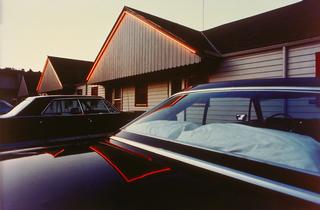
Source: Get The Picture: Postcards
Photography: rion.nu
"rion nakaya is a design director and street photographer in new york city." Source: ..: . rion.nu | new york city. :..
Development, Economics, International Relations: 60 Seconds With Jeffrey Sachs
Fast Company: What are our biggest problems?Source: 60 Seconds With Jeffrey Sachs
SACHS: I'm focusing on a world divided between rich and poor, and a world that doesn't seem to be able to manage the natural base of our lives: air, oceans, or biodiversity. It's a mistake to think that globalization is automatically beneficent and should run its due course--but also to think that it ought to be shut down.
FC: What have you learned about the very poor?
SACHS: That there are different problems in different places. Development can really work everywhere. But most of sub-Saharan Africa, the Andean region, and Central Asia face obstacles [of disease and isolation]. These are not cases of whether government cares or doesn't care, or is corrupt or uncorrupt. The haphazardness of life and death is absolutely shocking.
"FC: So if a bunch of CEOs walked in and said they wanted to help, what would you tell them?
SACHS: Let's say you had ChevronTexaco and ExxonMobil saying, We're investing in West Africa, what do we do? Well, the model of the past 20 years--protecting staff from malaria while ignoring the dying among you--is no longer workable. You have to engage with what business does best. Set real targets. Have quantifiable goals. I would tell these businesspeople that if they took up ending malaria in Nigeria or deforestation in Ghana, they would find a lot of partners. You don't have to start in the hardest places: I'll take you to governments that are ready and empowered to act. But don't believe it can happen without you."
China, Photography, Travel: Entering Shanghai

Took the maglev train into Shanghai - top speed on 30k run was 430 km/hour. Cost less than $10. Of course at the maglev station at the other end the taxi's are all refusing to use meters. (One just walk out on the street, but in the rain it is tedious).
Environment: Becoming Carbon Neutral
Pragmatic and the most effective of the sites doing this sort of 'calculate your damage and make a contribution so we can plant trees to deflect'.
Question: Do trees hold onto the carbon forever, or do they, eventually, 'off-gas'?
Observation: These sorts of sites assume an 80 year payback. You actually do a lot of damage on your one flight/drive etc. but since the tree will be absorbing carbon for 80 years, you only need to plant one tree. Seems like we might need to be planting 80 tress at a time.
"Offset Your CO2 Emissions": Tree Canada Foundation
Question: Do trees hold onto the carbon forever, or do they, eventually, 'off-gas'?
Observation: These sorts of sites assume an 80 year payback. You actually do a lot of damage on your one flight/drive etc. but since the tree will be absorbing carbon for 80 years, you only need to plant one tree. Seems like we might need to be planting 80 tress at a time.
"Offset Your CO2 Emissions": Tree Canada Foundation
30.9.05
Photography: Heading East
Extract of a moving post from flickrite The Mexican:
'You are lucky. Your world is very big. You can travel where you want and do what you want and you are free. You have friends in many places. Maybe I am just a friend you will forget. My world is small. I am not free. I will not forget this talk or this night. Maybe you will return. But maybe you will never come here again.'Source: Heading East: Aba-Amchok
29.9.05
Poetry: "the bitter unwanted passion of sure defeat"
Self-PortraitSource: Fire in the Earth
by David Whyte
It doesn't interest me if there is one God
or many gods.
I want to know
if you belong or feel abandoned.
If you know despair or can see it in others.
I want to know
if you are prepared to live in the world with its harsh need to change you.
If you can look back with firm eyes saying this is where I stand.
I want to know
if you know how to melt into that fierce heat of living falling toward the center of your longing.
I want to know
if you are willing to live, day by day, with the consequence of love and the bitter unwanted passion of sure defeat.
I have been told, in that fierce embrace, even the gods speak of God.
See Also: David Whyte's website
Politics, Books: Coffee: A Dark History
In this polemical, grandiose, yet thoroughly entertaining book, Antony Wild looks at the historical influence of coffee, for better and for worse. Perhaps it’s no surprise that Wild, a veteran coffee trader, credits the drink with opening the eyes of the world, literally. Once coffee usurped ale as Europe’s morning beverage of choice, the Enlightenment followed. The coffee shop is, he writes, “the place where all the best revolutions began.”Source: Coffee: A Dark History:
Ever since the Boston Tea Party, Americans have seen coffee as a symbol of their independence, and Wild insists that without the stuff, we would not be the hyperactively ambitious nation we are today. Instant blends helped GIs slog through World War II, while back home, caffeine fueled entrepreneurial baby boomers’ all-nighters. In this story, destiny always takes a second cup.
The flip side of such boosterism is the devastating effect the coffee trade has had on the developing world. But Wild is hopeful that some benefits are starting to trickle down to Third World farmers. By paying extra for a cup of “fair trade,” latte lovers might make coffee finally live up to its revolutionary potential."
28.9.05
Environment, Photography, politics: Smog Over China

"A huge, thick cloud of haze hung over eastern China in early September 2005. The Moderate Resolution Imaging Spectroradiometer (MODIS) flying onboard the Terra satellite captured this image on September 10, 2005. In this image, haze covers China from the Bo Hai Bay coastline in the east to the mountains in the west."Source: EO Newsroom: New Images - Smog over China
Another post about a similar image/topic, this time specific to Beijing is here.
Foreign Policy: A Trail of Diamonds

Striking photo essay: "It takes only weeks for a diamond, once uncovered in an African mine, to travel to India to be cut and polished and land in the showrooms of Paris or New York. The journey reveals some of globalization’s greatest fault lines—inequality, child labor, and outsourcing—and the people who too often fall through the cracks."
Source: Foreign Policy: A Trail of Diamonds
26.9.05
Photography: What is Hyperfocal Distance and Why Should I Care?
Whenever you focus your lens there will be an area that is in focus and areas that are out of focus. The in focus area is referred to as the "focal plane". The important thing is that 1/3rd of the focal plane is ahead of the thing you're focused on and 2/3rds of the focal plane falls behind what you're focused on.Source: Vivid Light
23.9.05
Photography: Dwanda Tyler in the French Quarter
Good NPR interview with Washington Post photographer ('we need a front page shot in 2 hours') Ricky Carioti via the Post's Photo Editor.
Also, Keith Jenkin's on alternate front pages.

Also, Keith Jenkin's on alternate front pages.
Technology, Writing: I think, therefore I consider blogging
Not really blogging as much as putting stray tidbits on line and toying with blogging - you can see it goes back several years, although intermittently. Keeping this blog below the radar though. The effort to transform proto-neurons into something comprehensible to others - and to what end? - seems too much. But fun, when inspired!
Also, struck by how time either culls the trend or it becomes easier to partake. Blogger is much more stable/easier than the software was at first, although it does seem to have been left deprived of features other blogging software has, like tags.
Also, struck by how time either culls the trend or it becomes easier to partake. Blogger is much more stable/easier than the software was at first, although it does seem to have been left deprived of features other blogging software has, like tags.
Paper PDA
"The PocketMod is a new way to keep yourself organized. Lets face it, PDAs are too expensive and cumbersome, and organizers are bulky and hard to carry around. Nothing beats a folded up piece of paper. That is until now. With the PocketMod, you can carry around the days notes, keep them organized in any way you wish, then easily transfer the notes to your PDA, spreadsheet, or planner."
PocketMod
PocketMod
Subscribe to:
Posts (Atom)